
Overview
This report provides a detailed analysis of a critical buffer overflow vulnerability, CVE-2025-55587, discovered in TOTOLINK A3002R routers. The vulnerability affects the router’s hostname parameter and can enable attackers to cause a Denial of Service (DoS) attack. Given the severity of the vulnerability, it is imperative for users and administrators to understand its mechanism and apply the necessary mitigation strategies.
Vulnerability Summary
CVE ID: CVE-2025-55587
Severity: Critical, CVSS score 7.5
Attack Vector: Network
Privileges Required: None
User Interaction: None
Impact: Denial of Service (DoS), potential system compromise, and data leakage
Affected Products
 Escape the Surveillance Era
Most apps won’t tell you the truth.
They’re part of the problem.
Phone numbers. Emails. Profiles. Logs.
It’s all fuel for surveillance.
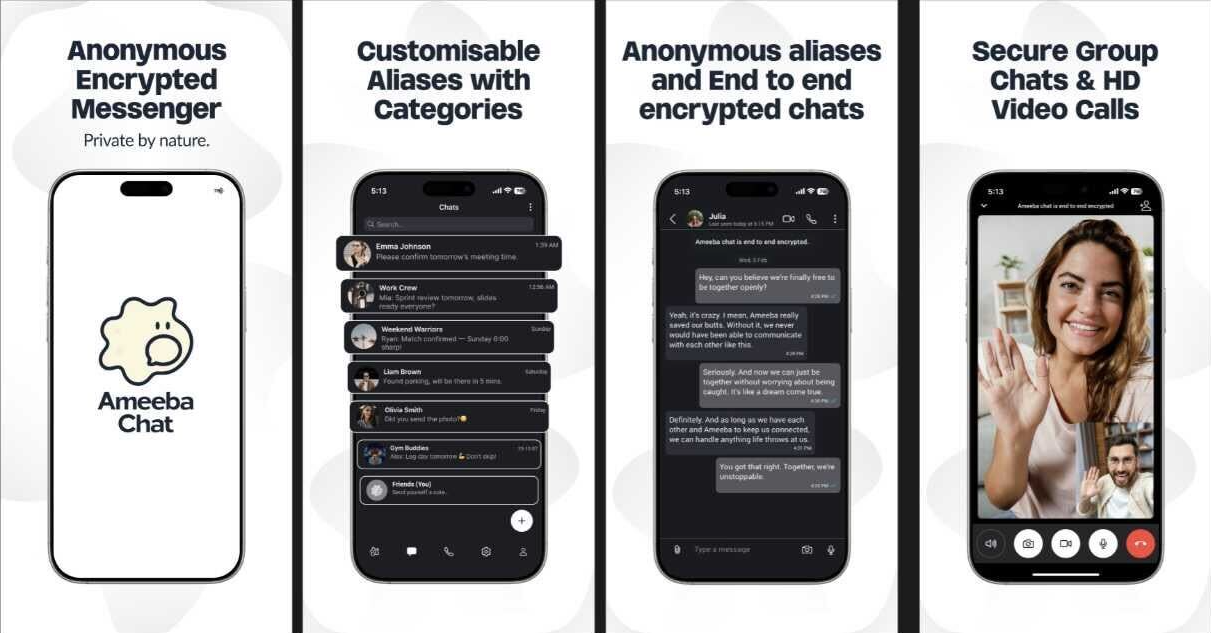
Ameeba Chat gives you a way out.
- • No phone number
- • No email
- • No personal info
- • Anonymous aliases
- • End-to-end encrypted
Chat without a trace.
Product | Affected Versions
TOTOLINK A3002R | v4.0.0-B20230531.1404
How the Exploit Works
The vulnerability resides in the hostname parameter at /boafrm/formMapDelDevice. Attackers can exploit this vulnerability by sending a specially crafted input that exceeds the buffer capacity of the hostname parameter. This causes an overflow condition, which can lead to a DoS condition, system compromise, or data leakage.
Conceptual Example Code
Below is a conceptual example of how the vulnerability might be exploited. This example simulates an HTTP POST request with an overly large ‘hostname’ value.
POST /boafrm/formMapDelDevice HTTP/1.1
Host: vulnerable.router.com
Content-Type: application/x-www-form-urlencoded
hostname=AAAAAAAAAAAAAAAAAAAAAAAAAAAAAAAAAAAAAAAAAAAAAAAAAAAAA... (continued)
In this example, the ‘A’s represent an input that is significantly larger than what the hostname parameter can handle, causing a buffer overflow condition.
Mitigation Guidance
TOTOLINK has released a patch to address this vulnerability. Users and administrators are strongly advised to apply the update as soon as possible. As a temporary mitigation measure, users can also deploy a Web Application Firewall (WAF) or an Intrusion Detection System (IDS) to monitor and block malicious traffic.
