
Overview
This report provides an analysis of the vulnerability identified as CVE-2025-47276 in Actualizer, a single shell script solution that allows developers and embedded engineers to build Debian operating systems. The vulnerability has resulted from the use of OpenSSL’s “-passwd” function, which uses SHA512 for password hashing, increasing the risk of potential system compromise or data leakage. This vulnerability is of significant concern to all users of Actualizer who are building a full Debian Operating System.
Vulnerability Summary
CVE ID: CVE-2025-47276
Severity: High (7.5 CVSS Score)
Attack Vector: Network
Privileges Required: Low
User Interaction: Required
Impact: Potential system compromise or data leakage
Affected Products
 Escape the Surveillance Era
Most apps won’t tell you the truth.
They’re part of the problem.
Phone numbers. Emails. Profiles. Logs.
It’s all fuel for surveillance.
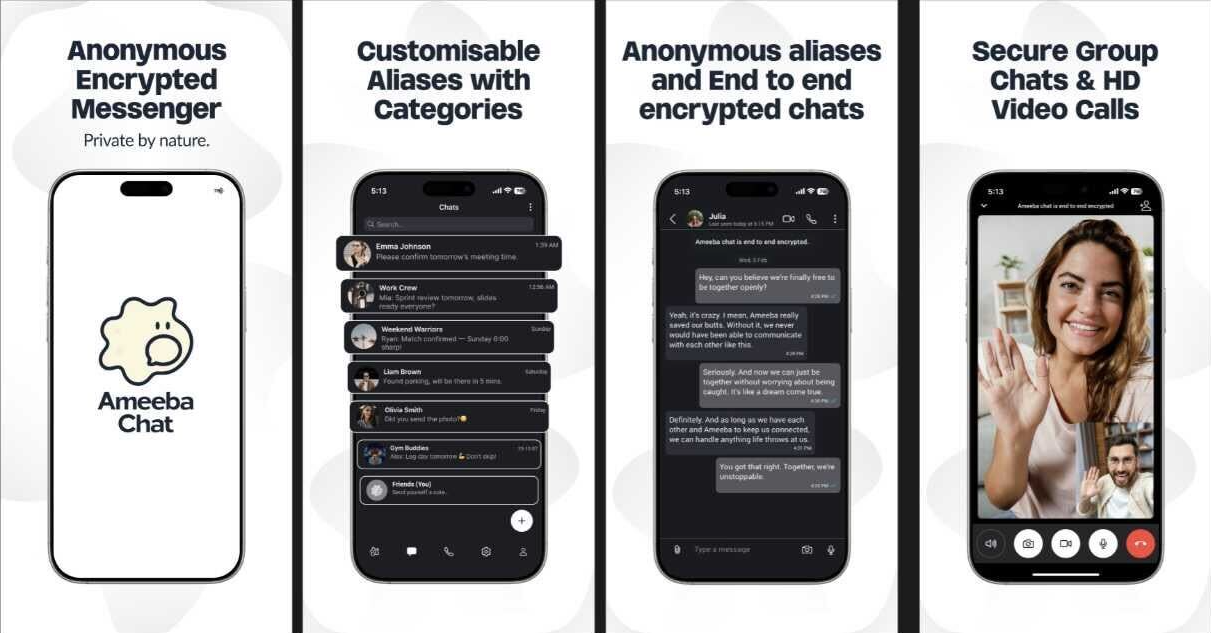
Ameeba Chat gives you a way out.
- • No phone number
- • No email
- • No personal info
- • Anonymous aliases
- • End-to-end encrypted
Chat without a trace.
Product | Affected Versions
Actualizer | Versions prior to 1.2.0
How the Exploit Works
The exploit takes advantage of the insecure password hashing implementation in Actualizer. Prior to version 1.2.0, the tool uses OpenSSL’s “-passwd” function, which uses SHA512 instead of a more secure password hasher such as Yescript/Argon2i. An attacker could potentially crack these hashed passwords, resulting in unauthorized system access.
Conceptual Example Code
This is a hypothetical scenario where an attacker attempts to crack hashed passwords. The attacker first obtains the hashed password, possibly through methods such as data leakage or network sniffing:
# Obtained hashed password
hashed_password='SHA512$...'
The attacker then uses a password cracking tool to attempt decryption:
# Password cracking attempt
john --format=Raw-SHA512 --wordlist=passwords.txt hashed_password
The `john` command represents a popular password cracking tool, and `–format=Raw-SHA512` specifies the format of the hashed password. The `–wordlist=passwords.txt` option specifies a file containing potential passwords.
Mitigation
To mitigate this vulnerability, users should upgrade to version 1.2.0 of Actualizer. For existing OS deployments, manual password changes are required for both the alpha and root accounts. The change will deploy Debian’s yescript, replacing the older SHA512 hash created by OpenSSL. As a temporary workaround, users can reset the passwords for both `root` and “Alpha” users. Alternatively, implementing a Web Application Firewall (WAF) or Intrusion Detection System (IDS) can serve as a temporary mitigation measure.
