
Overview
This report provides an analysis of the CVE-2025-29785 vulnerability, which targets the QUIC protocol implementation in Go, specifically the quic-go package. This vulnerability can potentially lead to system compromise or data leakage, affecting systems that utilize the quic-go package in versions prior to v0.50.1. Given the severity of this vulnerability, it is crucial to understand its implications and apply the necessary mitigation measures.
Vulnerability Summary
CVE ID: CVE-2025-29785
Severity: High (CVSS: 7.5)
Attack Vector: Network
Privileges Required: None
User Interaction: None
Impact: Potential system compromise or data leakage
Affected Products
 Escape the Surveillance Era
Most apps won’t tell you the truth.
They’re part of the problem.
Phone numbers. Emails. Profiles. Logs.
It’s all fuel for surveillance.
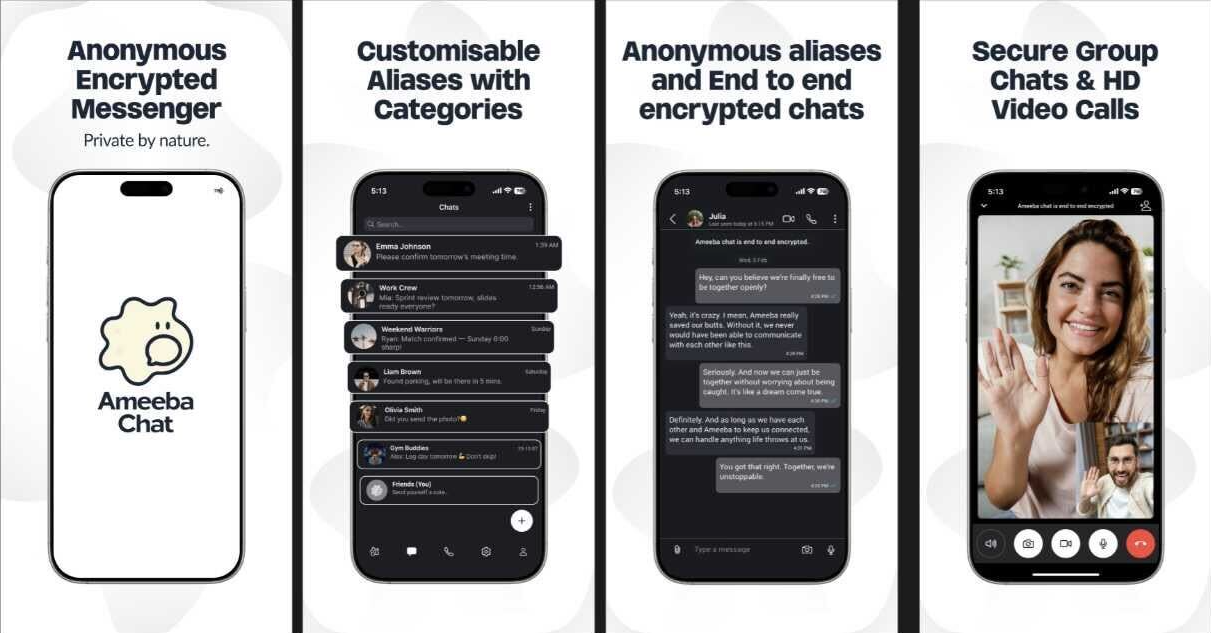
Ameeba Chat gives you a way out.
- • No phone number
- • No email
- • No personal info
- • Anonymous aliases
- • End-to-end encrypted
Chat without a trace.
Product | Affected Versions
quic-go | < v0.50.1 How the Exploit Works
The exploit takes advantage of a nil-pointer dereference in the loss recovery logic for path probe packets in the quic-go package. This can be triggered by a malicious QUIC client sending valid QUIC packets from different remote addresses, thus triggering the path validation logic where the server sends path probe packets. Subsequently, the client sends ACKs for packets received from the server, crafted in a way that triggers the nil-pointer dereference.
Conceptual Example Code
Below is a conceptual representation of how the vulnerability might be exploited. This pseudocode represents the process of sending valid QUIC packets from different remote addresses followed by specially crafted ACKs.
# Pseudocode representation
for address in malicious_addresses:
send_valid_QUIC_packet(address)
receive_probe_packet()
send_malicious_ACK()
Please note that the above code is a conceptual representation and does not represent an actual exploit.
Mitigation Guidance
The recommended mitigation for this vulnerability is to apply the vendor-provided patch (v0.50.1). This patch fixes the nil-pointer dereference vulnerability. In situations where immediate patching is not feasible, temporary mitigation can be achieved through the use of a Web Application Firewall (WAF) or Intrusion Detection System (IDS). However, these measures only serve as a temporary solution and the vendor patch should be applied as soon as possible to fully address the vulnerability.
